

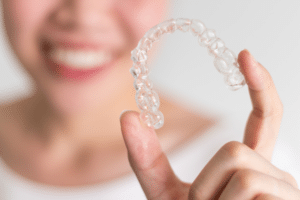
At Harwell & Cook Orthodontics, Dr. Anthony Harwell and Dr. Tanner Cook help families from Canyon, TX and surrounding communities compare these options. The practice offers braces as well as Invisalign and Spark Clear Aligners. Each approach can improve tooth alignment and bite function, but they work in different ways and require different daily care.
How Do Braces and Clear Aligners Straighten Teeth?
Both options use gentle, steady pressure to move teeth into better positions.
Braces use brackets and wires that stay on the teeth. The orthodontist adjusts the wires over time to guide each stage of movement.
Clear aligners use a series of removable trays made to fit the teeth. Each set moves the teeth a small amount before the next set continues the process. The trays must be worn for most of the day and night.
The American Association of Orthodontists offers a helpful comparison of braces and clear aligners. It explains key differences in eating, cleaning, removal, and daily wear.
Which Option Works Better for Complex Orthodontic Needs?
Braces often give the orthodontist more control over severe crowding, rotated teeth, large spaces, or complex bite problems. They also keep working without the teen having to remember to put them back in.
Clear aligners can correct many alignment and bite concerns, but they are not right for every case. The choice depends on which teeth need to move, how far they must move, and whether other appliances are needed.
Looks should not be the only factor. The teeth and bite must be checked to find the option that can make the needed changes safely.
Is My Teen Responsible Enough for Clear Aligners?
Responsibility is a key factor when parents compare fixed braces with removable aligners.
Clear aligners usually need to be worn for about 20 to 22 hours each day. The trays must come out for meals, be stored safely, and go back in after the teeth are cleaned.
Aligners can be left in lockers, wrapped in napkins, or lost during sports. Leaving them out too long can slow progress and affect how the next set fits.
Braces do not require a daily choice about wear time. Teens still need to brush well, avoid foods that can damage the brackets, and wear elastics as directed.
Clear aligners often work well for a motivated teen who follows a routine. Braces may offer more structure for someone who often forgets instructions or loses belongings.
How Do Eating and Oral Hygiene Differ?
Clear aligners come out before meals, so most foods are still allowed. Teens should clean their teeth before putting the trays back in to avoid trapping food and plaque.
Frequent snacking can make aligners less convenient. Each snack means taking the trays out, storing them, and putting them back in.
With braces, hard, sticky, or chewy foods can loosen brackets or bend wires. Sticky candy, popcorn kernels, and hard snacks may need to be avoided.
Brushing and flossing are often easier with aligners because there are no brackets in the way. The trays also need regular cleaning.
Braces need extra care around the brackets and wires, where food and plaque can collect. Floss threaders, small brushes, or a water flosser can help.
Which Option Fits a Busy Teen’s Routine?
Both choices can work for teens involved in sports, music, school activities, and social events.
Clear aligners are less visible in photos and conversations. Their smooth surface may also cause less rubbing against the lips and cheeks.
For contact sports, the trays come out so the teen can wear a proper mouthguard. The aligners must then be stored safely and put back in after the activity.
Braces may be easier for teens who do not want to manage removable trays during a busy day. Athletes with braces may need a mouthguard made to fit over the brackets.
Daily activities matter, but the main question is whether the teen can care for the chosen option correctly.
Are Braces or Clear Aligners More Comfortable?
Both options can cause short-term soreness because they move teeth.
Teeth often feel tender after braces are placed or adjusted. Brackets and wires may also rub against the cheeks or lips until the mouth adapts. Orthodontic wax can cover sore areas.
Clear aligners have smooth surfaces, so they often cause less rubbing. A new set can still create pressure for a day or two.
Comfort matters, but the option must also be able to correct the bite and tooth position.
Do Braces and Clear Aligners Take the Same Amount of Time?
The timeline depends on the bite problem, the tooth movement needed, and how well instructions are followed.
Broken brackets, missed visits, or poor elastic wear can delay progress with braces.
Clear aligners can take a similar amount of time when the trays are worn as directed. Poor wear can add time or stop the teeth from tracking with the trays.
Crowding, jaw growth, bite alignment, and case difficulty all affect the timeline. A custom plan gives a more useful estimate than a general average.
How Should Parents Make the Final Choice?
Parents should ask three questions: Which option can correct the problem, which routine can their teen manage, and which one will be used as directed?
Clear aligners may fit a teen who wants a less visible option and can follow a steady wear schedule. Braces may be better when more control is needed or a fixed option would be easier to manage.
Cost can also affect the choice, but braces are not always less expensive than clear aligners. The total fee depends on case difficulty, treatment length, insurance benefits, and the appliances needed.
At Harwell & Cook Orthodontics, Dr. Harwell and Dr. Cook can check your teen’s teeth and bite, compare braces with Invisalign and Spark Clear Aligners, and recommend a plan based on their smile and routine. Schedule a consultation in Canyon, TX to get clear answers and find the right next step for your teen.